When Does Your Car Need ADAS / Advance Driver Assistance Systems Calibration After Repairs?
ADAS is now baked into most modern vehicles. It is the reason your car can warn you when you drift, keep a distance in traffic, and sometimes brake when you are not reacting fast enough. The catch is that these systems only work as intended when the cameras, radar, and sensors are aimed correctly.
A lot of drivers assume ADAS is self-correcting. In reality, the hardware still has to be physically aligned, and even small changes from repairs can throw it off. If you have had work done recently and your driver-assist features feel different, calibration is often the missing step.
How Does ADAS Help On Your Daily Drive
ADAS is a suite of safety and convenience systems that use sensors, cameras, and radar to interpret what is happening around your vehicle. Depending on what your car is equipped with, it may help with lane keeping, adaptive cruise control, blind spot monitoring, automatic emergency braking, forward collision warnings, rear cross-traffic alerts, parking assistance, driver monitoring, traffic sign recognition, and surround-view camera systems.
All of that sounds high-tech, but it is still based on something pretty basic. The system needs a clean, accurate view of the road, and it needs to know what straight-ahead looks like from your vehicle’s exact ride height and alignment. If the view or the reference point changes, the decisions can change too.
Why Calibration Matters More Than Most People Think
A calibration is essentially resetting the system’s sense of reality. The camera needs to know where the lanes should appear. The radar needs to know the vehicle's centerline. The parking and surround-view features need to account for the true positions of the sensors relative to the bumper and body.
When calibration is off, you might see obvious signs, such as warning lights or disabled features. Other times it is more subtle. A lane assist system can feel overly sensitive, or it can react late. Adaptive cruise might follow too close or behave inconsistently. The whole point of ADAS is building trust, and that trust disappears quickly when the car feels unsure.
When ADAS Calibration Is Required After Common Repairs
ADAS calibration is not just a collision-repair thing. Many everyday repairs involve removing or shifting parts that cameras and sensors depend on. The more modern the vehicle, the easier it is to disturb these systems without realizing it.
Here are some of the most common situations that can require calibration:
- Windshield replacement
- Radiator or A/C repair when the bumper is removed
- Front or rear bumper replacement
- Suspension work
- Wheel alignment
- Collision repair, even minor hits
- Camera or radar removal
- Lift kit installation
- Airbag deployment
- Body panel replacement
- Roof or quarter panel repair
- Headlight replacement on vehicles with adaptive systems
- Grille replacement
- Camera bracket repair
- Any sensor disturbance
- A hard pothole strike or curb impact
If you had one of these done, calibration is worth discussing even if the vehicle seems fine. You are not being picky. You are making sure the systems you paid for are actually aimed correctly again.
Static vs Dynamic Calibration
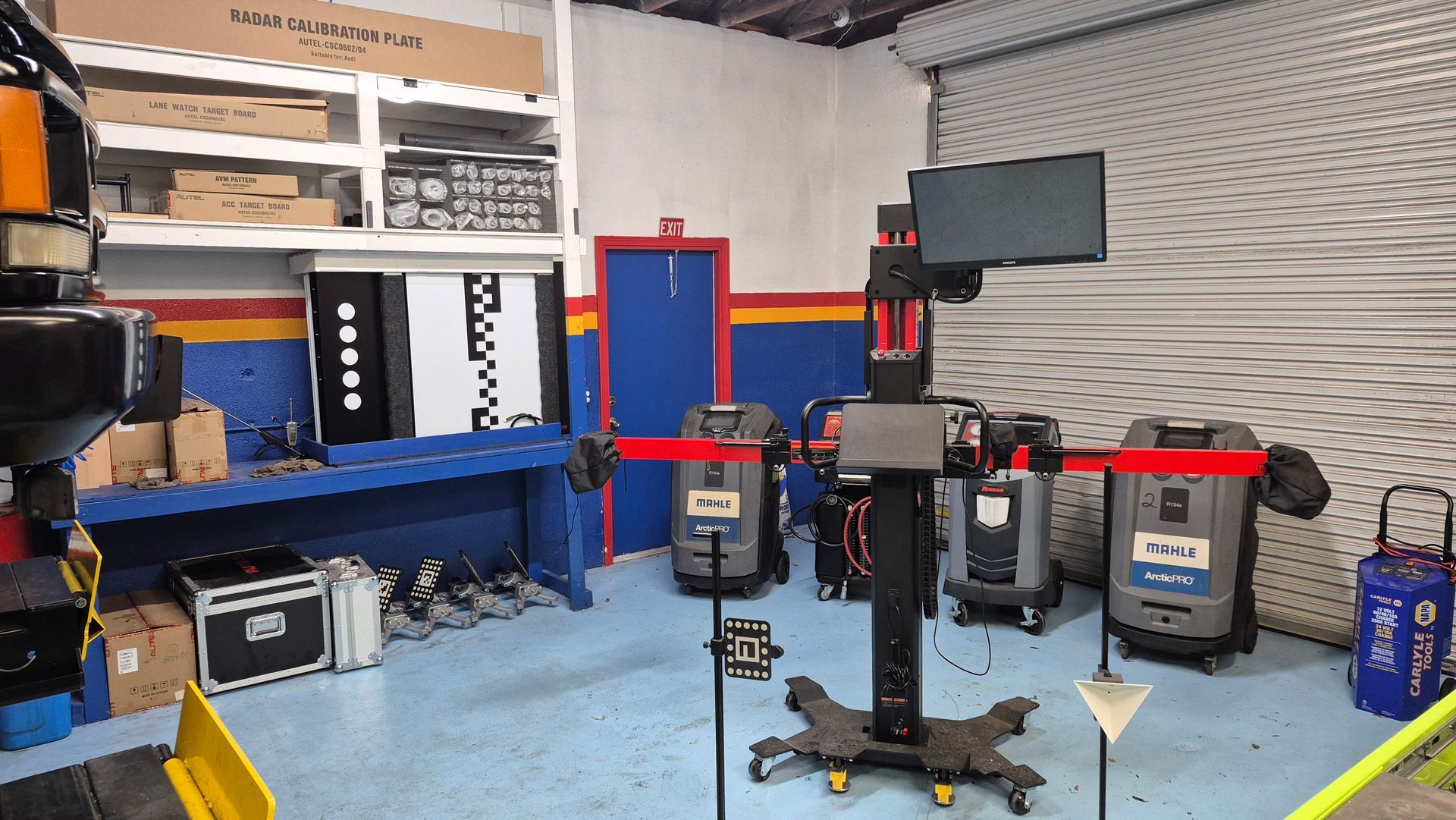
There are two main ways calibration gets completed. Some vehicles require static calibration, which means they are set up in a controlled shop environment with targets placed at specific distances and positions. This process can look almost like a small testing lab, because the goal is precision and repeatability.
Other vehicles use dynamic calibration, which involves driving the vehicle under certain conditions so the system can relearn its reference points. In some cases, a vehicle may need both. The correct approach depends on the make, model, sensor package, and the type of repair that was performed.
This is also why calibration is not a one-size-fits-all add-on. A proper calibration follows the procedures that match the vehicle, not a generic shortcut. If a shop says every ADAS calibration is the same, that is usually a sign to slow down and ask more questions.
What A Proper ADAS Appointment Should Include
A good ADAS visit starts with confirming what systems the vehicle has and what was disturbed during the repair. Then the calibration process is selected based on those systems and the vehicle’s requirements. If the vehicle needs a level surface, specific target placement, or certain pre-conditions, those steps matter.
A proper inspection of sensor mounting points is also important, because calibration cannot fix a bent bracket or a loose mount. If the hardware is not stable, you can get inconsistent results or repeat warnings. That is why we look at the physical side first, then calibrate, then verify.
Verification is the part many drivers never see, but it matters. The goal is not just to clear a warning light. It confirms the system is communicating correctly and behaving the way it should once the vehicle is back on the road.
Documentation And Liability Protection
ADAS calibration is tied to safety and liability. If the vehicle was in a collision or if an insurance claim is involved, it is helpful to have clear documentation that calibration was completed. It also matters for fleets and business vehicles where there is more exposure if a safety feature is not operating as designed.
From the driver’s perspective, documentation provides clarity. It serves as proof that the calibration step was not skipped and helps keep everyone on the same page.
How To Avoid ADAS Headaches After Repairs
The easiest way to avoid problems is to build calibration into the plan before the repair happens. If you are getting a windshield replaced, ask ahead of time whether your vehicle has a forward-facing camera and what the calibration plan is. If you are getting suspension work or an alignment, ask whether the vehicle requires a steering-angle or camera calibration afterward.
It also helps to pay attention to changes after the repair. If lane assist suddenly feels different, or your adaptive cruise behavior changes, do not write it off as the car being quirky. It is usually a sign that something needs to be corrected. This is one of those areas where regular maintenance planning helps, too, because keeping the vehicle’s alignment, tires, and ride height consistent supports how these systems interpret the road.
ADAS is not meant to make driving stressful. When it is calibrated correctly, it should feel natural and predictable. When it is not, you end up second-guessing features that were designed to build confidence.
Get ADAS Calibration In Titusville, FL, With Dave’s Auto & Mobile Repair
If you’ve had windshield, bumper, alignment, suspension, or collision work recently, the next step is to schedule ADAS calibration so it’s corrected and your safety systems can be trusted again.
Schedule service with Dave’s Auto & Mobile Repair in Titusville, FL, when you want the calibration handled with the right procedures, the right equipment, and as a result, you can feel good about every time you drive.